
22-year-old man died because the prison system failed him, says report

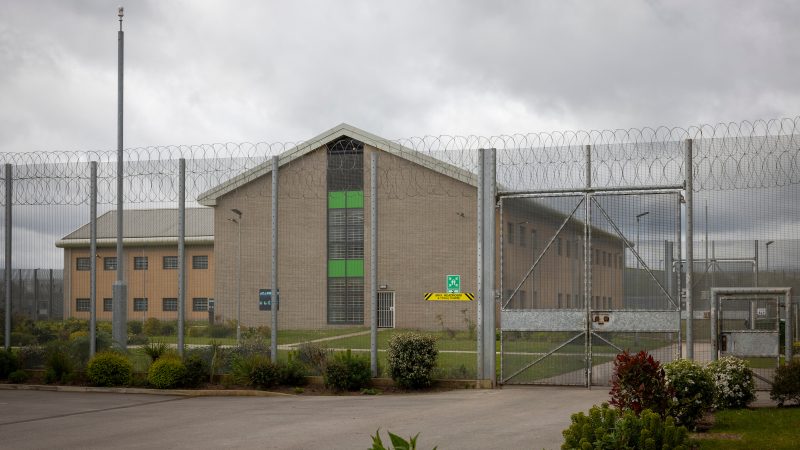
Adrian Usher, the Prisons and Probation Ombudsman, has pointed the finger at a number of prisons, and their method of dealing with people with mental health problems, in a recent report. It tells of the death of 22-year-old Jake O’Brien at HMP Forest Bank.
On 20 November 2023, Mr O’Brien was remanded to HMP Birmingham for several alleged offences, including burglary, theft, and affray. He was 22 years old and reported a history of self-harm, substance use, anxiety, ADHD (Attention Deficit Hyperactivity Disorder), and memory issues linked to a past head injury. He had been diagnosed with learning difficulties and borderline autism.
This was not his first time in prison. After transfers to HMP Brinsford and then HMP Liverpool, Mr O’Brien became involved in repeated fights and damaged prison property, leading to being held in segregation and receiving disciplinary sanctions. In September 2024, Mr O’Brien was found under the influence of ketamine. His mental health deteriorated, resulting in bizarre behaviour, assaults on staff and other prisoners, self-harm, and setting fires.
Staff initiated the process for monitoring prisoners at risk of suicide or self-harm, ACCT (Assessment, Care in Custody and Teamwork), and he was sometimes placed under constant supervision. Despite brief periods of stability, Mr O’Brien’s condition worsened, with impulsive behaviour, paranoia, and further substance misuse. He subsequently moved between segregation, residential wings, and the healthcare unit.
A psychiatrist prescribed antipsychotic medication, but he rarely took this. In October 2024, a psychiatrist referred Mr O’Brien for assessment for transfer to a medium secure psychiatric hospital. This assessment happened on 16 October. On 22 October, the hospital deferred the referral for a further month of monitoring and informed the psychiatrist verbally. On the same day, Mr O’Brien was transferred to HMP Forest Bank. Despite his complex condition, there was limited handover between the two prisons and no managerial oversight.
A mental health nurse from Liverpool provided information on his care by email to the mental health care team at Forest Bank. The nurse noted Mr O’Brien’s vulnerabilities, substance use history, and that he was being monitored under ACCT. He had also not taken his medication for four days. The nurse noted that Mr O’Brien’s referral to a secure hospital was outstanding.
Reception staff processed Mr O’Brien, and he was initially placed on a standard residential unit. On 23 October, the secure hospital informed Forest Bank that Mr O’Brien required close monitoring, a psychiatric review, and updated assessments. A nurse confirmed Mr O’Brien would be appointed a mental health nurse who would coordinate his care. This did not happen.
On 25 October, Mr O’Brien further refused his medication, attempted to jump from an upper landing on a residential unit, set fire to his cell, and concealed a blade. He was moved to segregation. A nurse assessed him as fit for segregation but failed to properly complete the assessment which decides if a prisoner can safely be segregated, nor did they file it in the medical record. Mr O’Brien remained segregated due to ongoing aggression and medication refusal. This information was not shared with the secure hospital.
On 31 October, Mr O’Brien assaulted his mother during a private visit. A nurse assessed him, found no injuries, and concluded that no treatment was required. The incident was not shared with the mental health team or the secure hospital. The same day, he missed a psychiatric appointment due to clinic overbooking. The psychiatrist rescheduled and advised staff to alert the secure hospital if his condition worsened.
Mr O’Brien then missed appointments on 4 and 5 November. It was not until 6 November that the mental health team was informed of the assault on his mother. A nurse shared this with the secure hospital and noted he had not received a psychiatric review or detailed mental health assessment. That day, Mr O’Brien assaulted an officer.
On 9 November, at 9.03am, staff found Mr O’Brien hanging from a light fitting in his cell on the segregation unit. They sounded the alarm and cut the ligature. Healthcare staff arrived and started resuscitation. At 9.20am, paramedics arrived and took him to hospital, where he died on 12 November.
The Ombudsman concluded in his report, published on 22 June, that HMP Liverpool could have, and should have, held Mr O’Brien at that prison whilst a place in a specialist hospital was found. The Ombudsman also found that at HMP Forest Bank, whilst his medical health needs were resolved, his mental healthcare fell short of the required standard and was only partially equivalent to that which would have been received in the wider community.
The clinical reviewers identified multiple communication failures between prison, healthcare staff, and external agencies, where key information was not recorded or shared, potentially affecting the accurate assessment of Mr O’Brien’s risk to himself and others.
When life is difficult, Samaritans are here to listen – day or night, 365 days a year. You can call them for free on 116 123 or visit samaritans.org



We need a deeper wisdom to prevail, really.
You really need a Prison (GP) doctor to represent strongly against this observed tendency for Psychiatrists, to give their psychiatric cases into Prison care.
You need to be a doctor yourself, to challenge a psychiatrist’s decision.
It is humbly not clear that compulsory admission and compulsory treatment under the MHA would have saved him, – but surely he would then have stood a better chance? This informal psychiatric treatment he had, well, you could say it failed? I humbly don’t see how what the Psychiatrist decided to do, reflects at all on the Gaol? Unless there was a Prison (GP) doctor who might have considered ringing up the Psychiatrist again and again? I purely guess that the Psychiatrist, had few or no psychiatric beds to offer. In which case we might be blaming the wrong structural deficit., is my humble opinion.