
Building of 300 prison cells held up by green law

The building of almost 300 new cells to provide much-needed extra prison capacity has been delayed – by an environmental law which protects streams from becoming choked with water-weed.
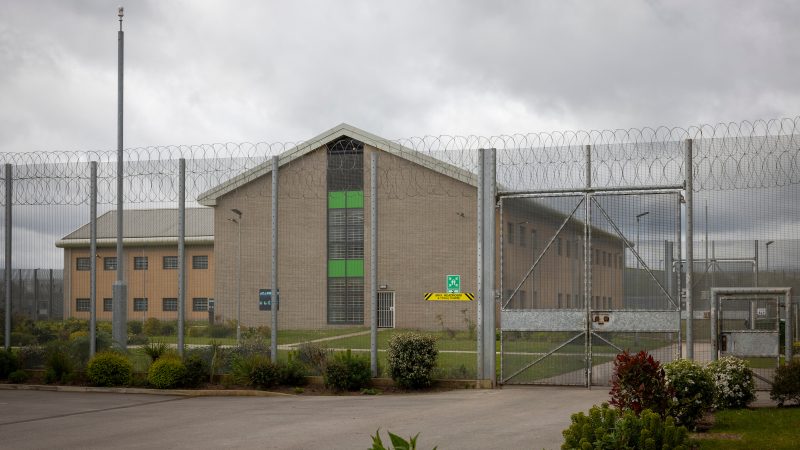
The Prison Service set out to create additional places by installing temporary buildings at four English jails: Holme House and Kirklevington Grange on Teesside, Deerbolt in County Durham, and Bure in Norfolk.
But at each site, planning applications were affected by ‘nutrient neutrality regulations’, which restrict construction projects in parts of England in order to limit the run-off of nitrates and phosphates into watercourses.
Justice Minister Sir Nicholas Dakin informed the House of Commons of the problem, telling MPs: “The Rapid Deployment Cells programme has been affected by nutrient neutrality rules at four sites. Developments in these catchment areas need to either secure nutrient credits or other nutrient mitigation for planning permission to be granted.”
At two of the sites, Kirklevington Grange where 152 extra cells are planned and Holme House where 21 are planned, the relevant certificate has been received and planning permission has now been granted. At Deerbolt, where 60 cells are planned, a certificate has been received but a planning application has not yet been submitted. At Bure, where around 60 cells are planned, the situation is described as “mitigation ongoing” and planning consent has not been sought.
The nutrient neutrality regulations stem from a European Court of Justice Ruling in 2018, known as the “Dutch nitrogen case”, and were incorporated into guidance from Natural England in 2019. They restrict house-building and other construction projects in 74 council areas where river catchments are already high in nitrates and phosphates. Concreting-over of open ground can accelerate the run-off of water into streams, adding to their nitrate and phosphate levels and promoting the growth of green algae, which can overwhelm other wildlife.
However, most nitrate and phosphate run-off is due to agriculture, not construction. Then-Levelling Up Secretary Michael Gove tried to scrap the regulations in 2023, calling them an unnecessary brake on housebuilding, but had to abandon the plan after the Government was defeated in the House of Lords, with opposition parties claiming that the measure would pollute rivers.
Now Labour will try again to sweep away the regulations, as part of its approach to speed-up the planning process to favour developers. Sir Nicholas told the Commons: “The Ministry of Housing, Communities and Local Government’s Planning and Infrastructure Bill proposes a more strategic approach to nature recovery, which we expect would streamline the process for nutrient neutrality mitigation.”
Inside Time was the first to report, in February 2024, that the then-Conservative government was blaming its failure to build enough prison places in part on the nutrient neutrality regulations. At the time, the Ministry of Justice declined to state which sites had been affected, citing commercial confidentiality.
Then-Prisons Minister Edward Argar told the Justice Select Committee in February 2024, in seeking to explain the Conservatives’ failure to meet their target of building 20,000 extra prison places by 2025, “There are planning considerations, such as, in a number of prisons, nutrient neutrality regulations and what can be done to gain credits to offset them, or address them by other mitigation. That has caused delays. If the Committee is asking the straight question of whether 20,000 will be in place by 2025, I do not anticipate that happening.”



What I wonder about humbly, is whether Fentanyl- and Cannabinoid run-off’s from Prisons could be toxic to river life. Surely that requires parallel consideration. Little doubt now, where the idea for the Triffids came from.