
Serious offences by people on licence have risen sharply

The number of serious offences committed by people on licence have risen to the highest level since records began.
There were 872 such incidents last year, up from 770 in the previous year, an increase of 13 per cent. The year before that, the number was 551. Serious offences include murder or attempted murder, manslaughter, sexual assaults, arson, kidnapping, and causing death by dangerous driving.
Martin Jones, HM Chief Inspector of Probation, has said that public safety is being put at risk because probation officers were missing key warning signs of threats posed by offenders supervised in the community. He said: “I am increasingly concerned that probation is falling short in its duty to protect the public.”
He added that every front-line probation delivery unit he had inspected was rated either “inadequate or requiring improvement”.
A Ministry of Justice spokesperson said: “While serious further offences are extremely rare, they have a devastating impact on victims and their loved ones, and we take each every one extremely seriously.”


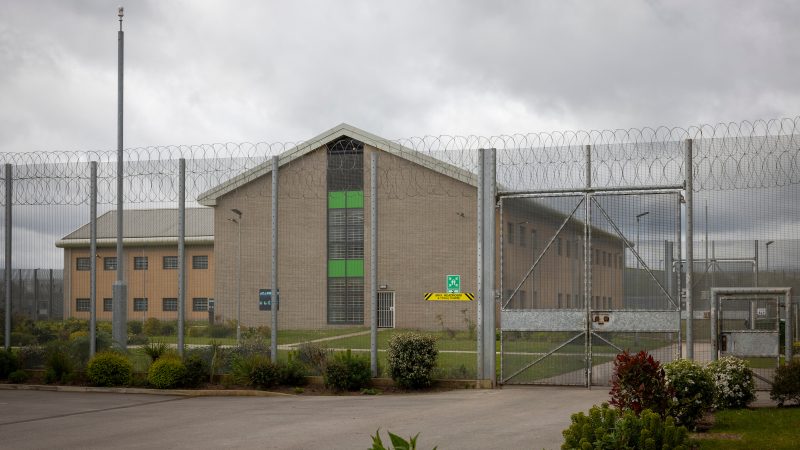

Maybe IT is so niche that it can get away with lazy journalism.
Please, please can news media of all types recognise that using AI generated images to illustrate a news story ( however accurate the written or spoken story might be)
Fundamentally undermines the trustworthiness of reporting since it blurs the lines between fiction and fact
Don’t do it just do a cute picture that fits
they let the wrong people out and keep the wrong people in thats the problem
How do you know who should be kept incarcerated and who should be released on licence?
This rather undermines the inherent reliability of Parole Boards.
Perhaps people do remain free agents, – who just cannot be predicted no matter how hard anyone tries.
Could it be that we are releasing more of that type of offender?
Which type of offender? The type that is more likely to reoffend? The problem is knowing.
We need to know the totals of “people out on licence” in each successive year. More people out there on licence, could well be linked to more offences!
It could be as simple as that, – that we are just comparing different-sized populations.
Perhaps we are considering more offences as “serious” now, – the ‘sexual offences’ seem especially unstable.
Also, more actors are involved in protecting the Public, than just the Probation alone. Suppose criminals had a greater certainty of being caught, for example.
The media, including this site, is comprised of people who didn’t learn much about statistics at school.
Surely not, – why, in this very InsideTime edition, we see advertised for sale, a Probation Officer’s “How I Saved Them” book ! But not wanting to be unkind, – no doubt he did.